

The world of Electronic Music has experienced significant turmoil over the past few months, with events owned by companies that have received investments from KKR being boycotted by both fans and artists. The backlash stems from KKR’s investments in weapons manufacturing and real estate. Many took to social media to voice their disapproval of the company’s portfolio and to express frustration with a scene increasingly seen as corporate and detached from its underground roots, arguing that that’s far from the ethos that created the movement. So what’s the deal here, and why should we care? Let’s take a step back and look at the bigger picture.
For much of its history, the business side of electronic music was invisible to most people unless they worked behind the scenes. After all, this side of the scene was never really public, and people just cared about attending events for the music, and having a good time. But in the last few years, this perspective has shifted, with more of what goes on behind the decks getting airtime in specialty media, and social networks.
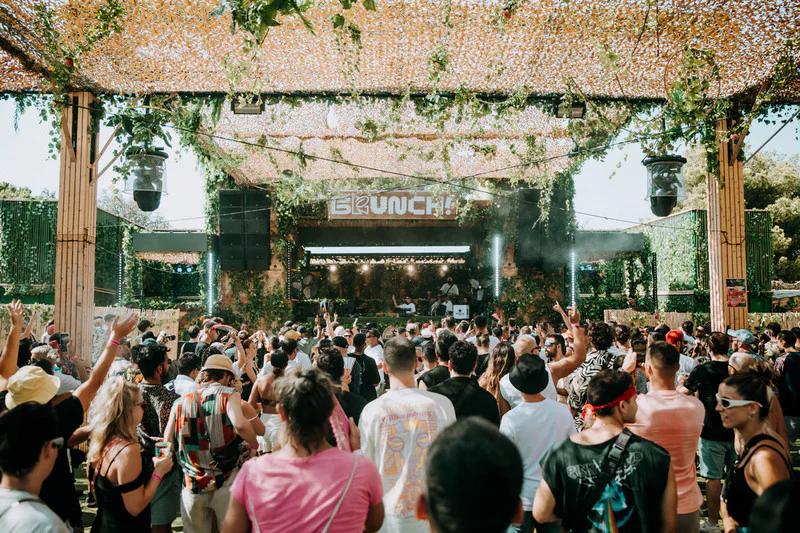
The buzz around these topics gathered traction mid last year, when KKR acquired entertainment giant Superstruct, effectively making them owners of brands such as ID&T (and, consequently, all it’s affiliates and sub-brands), Brunch Electronik, Elrow, DGTL, Sonar, Sziget, and even renowned events outside of Electronic Music such as Wacken and Ressurection.
This wasn’t an unprecedented move in our scene. Investment funds have been involved in electronic music for many, many years. ID&T itself has gone through multiple corporate transitions. Superstruct had already bought it for an “undisclosed sum” (rumored to be up to $200 million) in 2021. This acquisition was made to Axar Capital, another investment firm… who owned debt from SFX, who in turn had already bought ID&T in 2013. KKR’s involvement marks just another chapter in a long history of corporate reshuffling…
This discussion escalated and gained a life of its own when it became widely known that KKR also invests in companies that supply the military, particularly the IDF, as well as in Israeli real estate. This revelation triggered widespread calls for boycotts of organizations linked, however distantly, to KKR’s investment network.
This sums up the debacle, one of which you’ve certainly seen discussions about online.
This debate highlights two recurring social patterns. First, people often lack a solid understanding of complex issues but still feel compelled to voice strong opinions. Second, in trying to make their points, some take things too far, crossing lines and alienating others.
The most obvious takeaway here is that those who believed that the Electronic Dance music scene is purely underground and community-owned are detached from reality. This scene has been business oriented for decades. For all this time, these people haven’t stopped to question themselves how the actors in this scene can survive and make a living. Promoters, artists, and other professionals depend on financial sustainability to keep it alive. Event promoters have to foot the bills to make events become a reality, and need a profit oriented mindset to keep the ball rolling. To make an event happen, they need to pay for a venue, sound, catering, licensing, rigging, marketing, artists, creatives, and the list goes on. After covering these costs, they need to have profits to fund further events, and put food on their own tables. Likewise, artists need to invest in things such as equipment and marketing, as well as invest VERY LONG hours in their craft, whether that’s producing, DJ’ing, or both. There are many other players in the scene that are essential, and need to make a living for it to thrive, but these examples should be enough for anyone to understand what I’m trying to showcase here. Organic growth is important, but it’s not enough anymore to sustain a competitive global entertainment industry. In short, without at least a partially business oriented mindset, nobody will survive a scene that’s extremely demanding, with the very same people that criticise it’s lack of “undergroundness” being the ones that want to see the state of affairs being pushed to it’s highest limits, and most benefit off of the evolution…
The less obvious (but, in my opinion, the most important) takeaway from all of this is is that many people struggle to compartmentalize complex realities. They end up rejecting or ignoring the basic principles that allowed this culture to exist in the first place.
KKR is an investment firm. They’re profit oriented, and employ very smart people that tell them where they should put their money in order to maximize profits. That is all there is to it. It so happened that at some point, said people told them that there is money to be made in the entertainment industry, and at another point that there is money to be made in weaponry and military intelligence. These very smart people are completely right, and thus investments in said fields were made.
These two very, extremely distinct fields have nothing to do with each other, and (surprise, surprise!) neither KKR has anything to do with either besides having put money in it. That is all there is to it, a money flow. KKR doesn’t care in giving you nice perks with your next festival ticket, or having a lineup that is relevant for the current state of affairs on a specific genre. They have absolutely no clue about what promoters do, what festivals are held when, or even what prices the tickets go for. They aren’t putting their hands on any of this, nor they have a single clue of what goes down in specific organisations that are owned by a brand, that are owned by a brand they just happen to have put money in. Their only concern is whether the balance sheet trends upward (which it does, and will continue to) – nothing else matters.
Before I move on with this article, and since this topic is sensitive for many, I will preface the coming paragraph by saying that I do not condone war in any way, shape or form. War is wrong, and whoever engages in it is wrong. Wars must be erradicated. Period.
The very same principle we’ve seen towards KKR’s stance on sub-sub-sub brands they happen to be very distantly related to due to corporate technicalities, also applies to the investments they do elsewhere. These firms care only about returns, not ethics. All that matters is that their balance sheet increases, which it does when we talk about investments connected to wars too. The world’s financial systems make war profitable. A tragic but deeply ingrained reality explored in countless works on economic history. If you ask me, these ethically questionable investments are malinvestments that should not occur. But our world is far from perfect, and the aim of my article isn’t this topic.
These are effectively very important topics that we must bring awareness to. However, we shouldn’t do so by any means possible. More often than not, the end doesn’t justify the means.
If you’re an artist who refuses to perform at events indirectly linked to KKR, you’re not hurting KKR – you are hurting the company that booked you. KKR will divest from any asset that stops delivering expected returns (trust me, they’re not going to wait for an investment to fail – they will get rid of something giving them 5x profit just because it’s not giving 20x profit anymore). Your absence won’t register on their radar, but it will affect those who booked you, the fans who bought tickets, and the staff who rely on those events for their livelihoods. What you’re doing is simply negating your fans an opportunity to see you perform just because there is a very loose connection to an entity that just so happens to invest in things you don’t agree with. You are hurting promoters that literally have nothing to do with KKR or any war by denying them the chance to sell tickets to people that want to see you. The vast majority of people that make these events a reality didn’t ask, agreed to, nor had a say when it came to being sold to Superstruct, and not a single person within these organisations asked, agreed to, or had a say AT ALL in being sold to KKR. They’re on the same side of the fence as you. So why are you harming them?
Similarly, if you’re a fan who boycotts these events, you’re not affecting KKR in any meaningful way. KKR doesn’t track attendance figures at individual festivals, or even if that event is taking place at all. Your absence will simply contribute to less tickets sold, putting the promoter’s business in jeopardy, which may ultimately lead to an event’s demise, further decreasing your favorite artists’ chance to make a living off of their trade, leading them to pursue day jobs that can give them stability and hopefully, with some luck, will allow them to fund their dream of becoming full time artists (which is a struggle where many fail to succeed, as we very well know). This, in turn, makes the scene a less vibrant space.
So far I’ve talked about people that boycott shows by not attending. But there are some people that think it’s even better to actually go to these shows and jeopardise them, disrespecting everyone, from artists, to promoters, and atendees in one go. These egotistical actions show complete disregard for people’s art and livelyhood, as well as lack of respect, and may even hurt people in the process. This undermines the culture of respect and unity that defines the dance floor
It’s also not uncommon to see people online commenting that certain groups of people should have their entry barred to events just because they sadly lost the geographical lottery (something they absolutely could not control) and were born in a specific country ruled by genocidal leaders, regardless of if they agree with said leaders, further fostering the racial/religious discrimination they claim to be against, and destroying one of electronic music’s core principles: the dance floor as a space of equality, freedom, and acceptance. Certain organisations have drawn this kind unwarranted attention to the point where they had to fight really hard against smearing campaigns and debunk obviously false accusations that were severly affecting their activities.
Ultimately, the dance floor is not a place for political activism. It’s a place for connection, creativity, and love through music. We should protect that space, keeping it a sanctuary where everyone is welcome and our where shared humanity outweighs our differences. Let’s make the dance floor a better place than the world outside it.