If Hardstyle still speaks Dutch, why is so much history happening Down Under?
There is something slightly absurd about looking at an Australian Hardstyle line-up in 2026 and feeling jealous from Europe.
The recently annuunced EPIK lineup is full of heavyweights, with all the spotlights on Project One.
This act alone would once have been enough to make an Australian fan stare longingly towards the Netherlands and wonder why these things always happened sixteen thousand (!) kilometers away. Except this time the opposite is true. Alongside Headhunterz and Wildstylez sits another detail that may ultimately be even more revealing: Rebelion will premiere a new act there, before taking whatever that new concept becomes into the wider world.
For most of Hardstyle’s history, this is not how the geography was supposed to work…
The Netherlands made the music, built the labels, invented most of its institutions and hosted the events around which the scene constructed its mythology. Other countries had scenes, but the gravitational pull remained Dutch. A truly important reunion belonged at Qlimax. A new show belonged at one of the major Dutch summer festivals. Australia received those artists when the touring calendar and economics permitted…
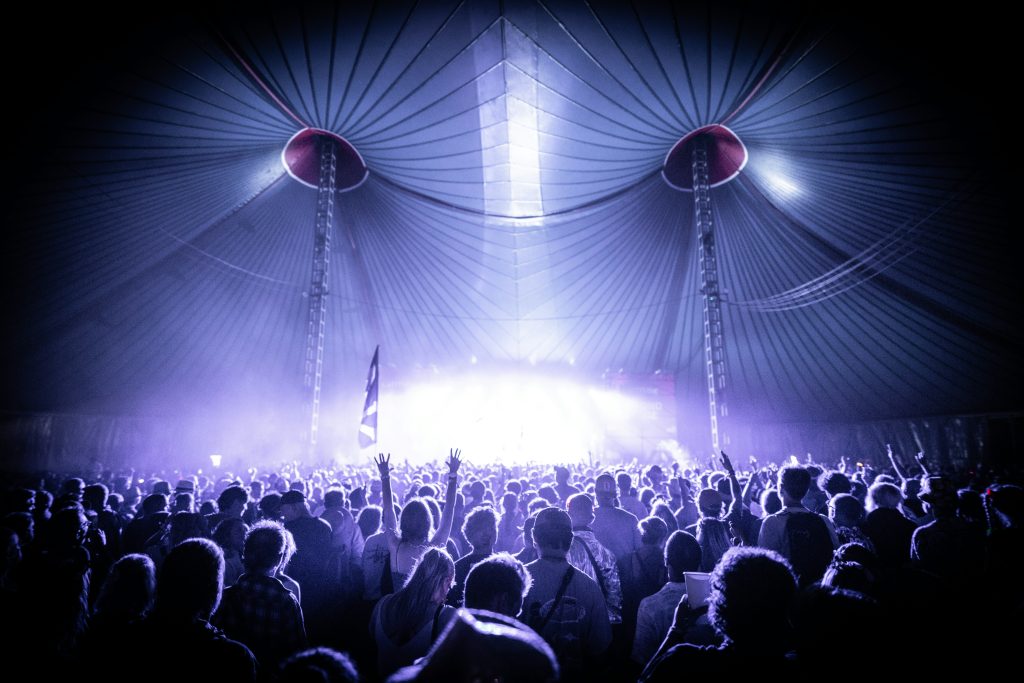
…except Australia has been quietly breaking that rule for years. And perhaps “quietly” is the wrong word for anything involving 60,000 Australian ravers.
But before looking at what HSU has achieved, we must look at the Australian scene itself. Before Australia became a market capable of importing extraordinarily scarce pieces of Hardstyle culture, it spent years exporting people into it.
By the end of the 2000’s, Australians were already turning up inside the European system in force. Bioweapon – Sam Gonzalez and Corey Soljan, who would become Audiofreq and Code Black, respectively – joined forces in Australia in 2008 before eventually moving to the Netherlands. Toneshifterz emerged at roughly the same moment and moved into the Fusion Records orbit, as would Corey solo as Code Black. Artists such as Nitrouz were also releasing on Dutch Master Works and Fusion. Meanwhile, on the darker side of the music, Delete and Vazard were laying foundations for an Australian lineage whose influence would outlive the idea of “Australian Hardstyle” as some isolated regional curiosity.
There are two histories here that I think we sometimes flatten into one. One is the Australian melodic tradition: Bioweapon, Code Black, Audiofreq, Toneshifterz. Artists who could stand comfortably in the international euphoric and festival-facing ecosystem and who, in various ways, made the enormous journey to Europe because it would have been impossible to build their careers properly without doing so.
The other is the “uglier” one, in the best possible sense: Delete, Vazard, Spoontech. Australia was not simply consuming Dutch raw once raw became fashionable. Australian producers helped make some of the music that taught raw how dark, strange and technically obsessive it could become. They were becoming the blueprint for the most extreme edge of Hardstyle without even knowing it.
The paths of these artists and labels unfolded at almost exactly the same time… along with HSU’s own history.
The promoter traces its story to 2009, when Harder Styles United was still a monthly Sydney club night at The Gaff. Among the local artists it remembers playing those nights are Toneshifterz and Bioweapon. That detail is more important than it appears. The promoter that now has the leverage to put Project One and a Rebelion world premiere on an Australian line-up did not arrive later to exploit a market somebody else had created. It was growing at roughly the same time as Australia’s first internationally important generation of Hardstyle artists.
16 years later, Toneshifterz could look back on those small HSU nights while making the anthem for Knockout Outdoor. The scale had changed almost beyond recognition; the relationship had not.
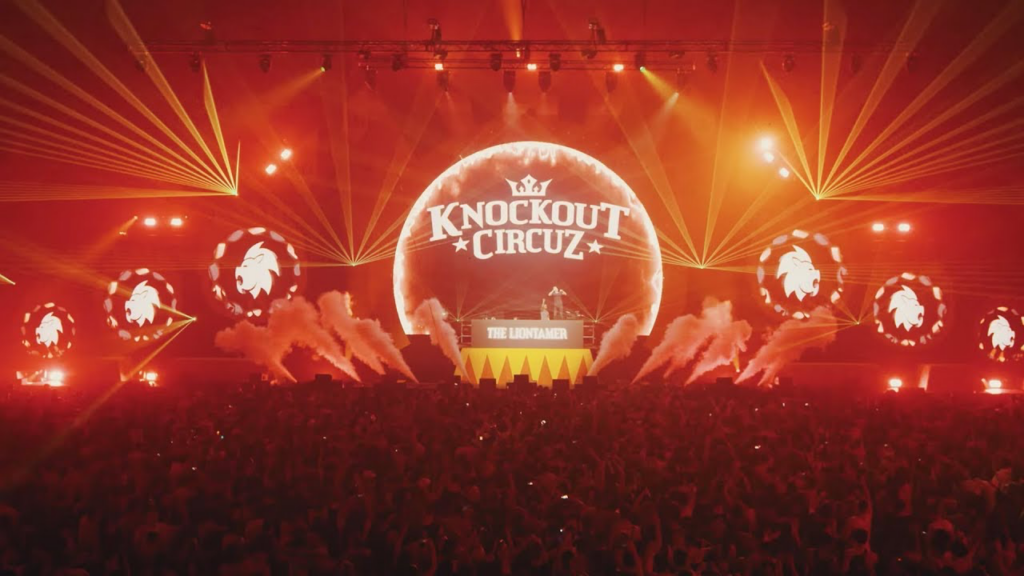
That matters when we talk about money. One of the most revealing stories in HSU history is also one of the funniest examples of the scene dressing a fundamentally commercial decision in mythology: in October 2016, HSU announced Project One for Knockout Circuz. At the time, the idea of a proper Project One return still carried the quality of a Hardstyle rumour you wanted desperately to believe. Headhunterz and Wildstylez had not been operating Project One as a normal bookable act. Contemporary reporting on HSU’s announcement explicitly described the duo’s long absence and noted that the expected Qlimax appearance was still, at that point, a rumour.
Years later, Wildstylez told the story on HSU’s own podcast not with mythology, but in a typically Dutch way – with a lot of honesty and directness. The practical reason Australia could get Project One was that HSU made an offer that made doing Project One make sense. Q-dance subsequently booked the duo for Qlimax. The latter became the image engraved into Hardstyle’s collective memory; the former came first.
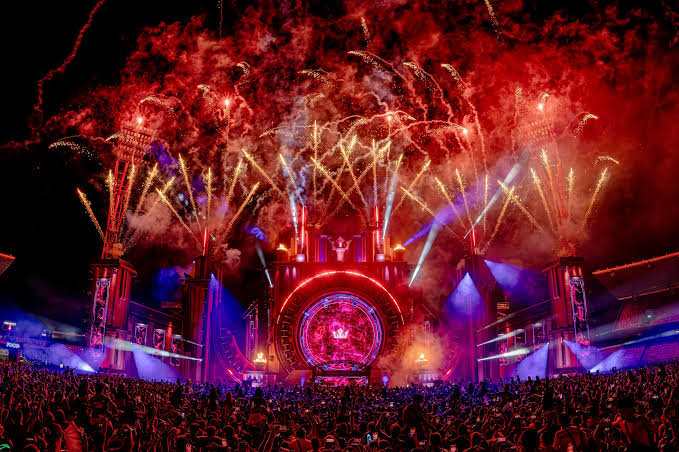
That sequence fascinates me. Because it exposes the difference between where Hardstyle history happens and where Hardstyle history is canonised. Of course we remember Qlimax. Project One under the GelreDome roof belongs naturally inside the visual language through which this scene remembers itself. But before the Dutch institution could turn the reunion into mythology, an Australian promoter had already made the dormant act commercially real again.
And if this had happened once, it would be trivia… But then came Showtek.
At Knockout Circuz 2017, HSU booked the brothers for a full Hardstyle set after years in which Showtek had moved almost entirely into EDM. They had appeared as part of the Defqon.1 Legends ceremony, but that was not the same thing as Showtek returning to play nearly 100 minutes of Hardstyle. Sydney got that.
HSU brought Project One back to Sydney for Midnight Mafia in 2018. It increasingly packaged limited appearances, alternate sets and special concepts as part of the product. Years later it returned to Showtek, advertising another scarce Australian Hardstyle appearance. Then the pattern became almost comically explicit.
Headhunterz eventually stopped performing at the end of 2023. Two years later, EPIK 2025 advertised a world-exclusive mystery guest, who ended up being Headhunterz.
And it didn’t end there – HSU also pulled The Prophet out of retirement recently, 3 years after his “final” show at Defqon.1.
These are all big examples of effectively cashing in on (and bankrolling) nostalgia. HSU’s speciality increasingly seems to be making an artist – or a particular version of an artist – available. HSU can sell the absence itself: the years since somebody last performed, the set that supposedly cannot be booked, the mystery name nobody expects, the classics catalogue that an artist normally refuses to revisit. In other words, HSU is not only booking DJ’s anymore. It is booking circumstances. And the most interesting development is that the circumstances are no longer exclusively nostalgic. That is what makes Rebelion’s EPIK 2026 billing so important.
Project One, Headhunterz, The Prophet and Showtek were, in broad terms, different forms of resurrection: of an artist, a brand or a musical identity. MWI is new.
Rebelion are not bringing Australians a European concept after the Dutch festivals have already established it. They are giving Sydney the world premiere. That is a subtle but profound reversal.
For decades, Australian Hardstyle artists have understood that the road to the centre of this culture runs through Schiphol. Pretty much every major Australian artist from the early days I mentioned at the start of this piece moved to the Netherlands. Later generations did it again. Artists like Mish, Anderex and DEEZL belong to a newer generation that has similarly become deeply integrated into European labels and touring.
But focus on the “return” journey now…
Gearbox can sell out an Australian arena, with Australian producers among the artists representing its sound. HSU can bring back Dutch legends who are barely performing, or not performing at all. A European act can decide that its next show should begin in Sydney rather than the Netherlands.
This doesn’t make Australia Hardstyle’s new capital, nor does it make the Netherlands less important, but it does slightly decentralise the scene.
You cannot purchase the historical density of a country where this music’s labels, studios, artists, promoters and institutions grew up within driving distance of one another. Hardstyle still speaks Dutch even when the kickdrums have travelled everywhere. But perhaps we need to retire the idea that the Netherlands has exclusive custody of Hardstyle history.
Australia spent a long time being a satellite in the geographic sense while refusing to behave like one culturally. It produced artists. It produced sounds. It built an audience large enough to sustain its own enormous institutions. And now, every so often, the strange thing happens: Europe looks at Sydney and asks why they get that. Maybe EPIK 2026 is not the moment Australia became one of Hardstyle’s centres. Maybe it is simply the moment we finally noticed that it already was.