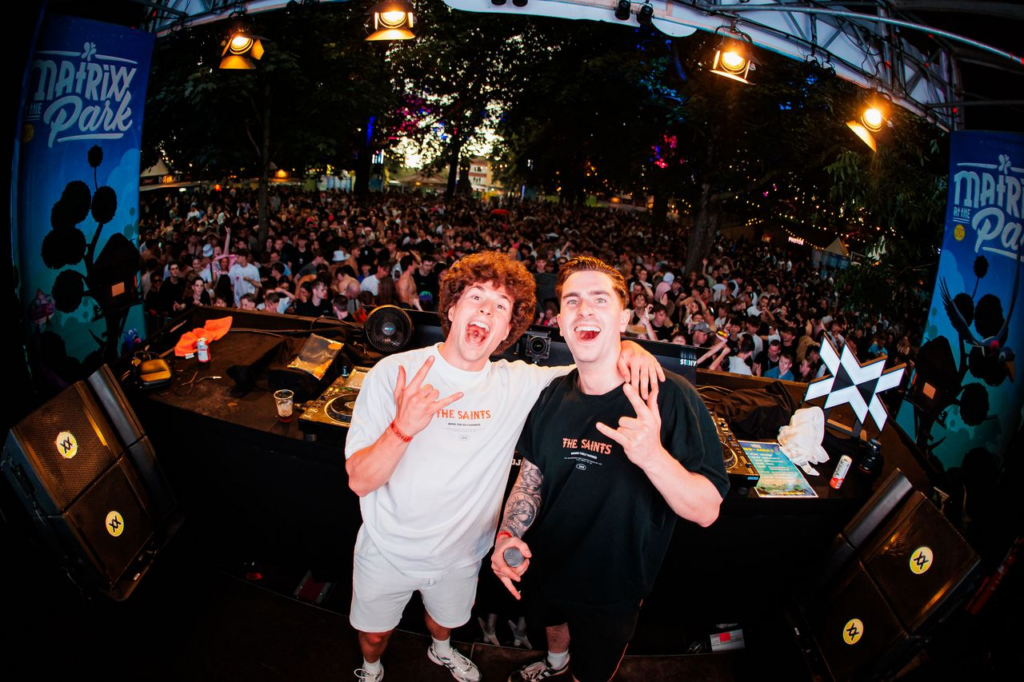
There was a time when getting Hardstyle onto the main stage of anything outside our own world felt like an achievement in itself. Not simply getting a Hardstyle artist onto the line-up, giving Q-dance a stage in a distant corner of a festival site, or letting the harder styles take over for an hour after midnight… Getting the actual Mainstage.
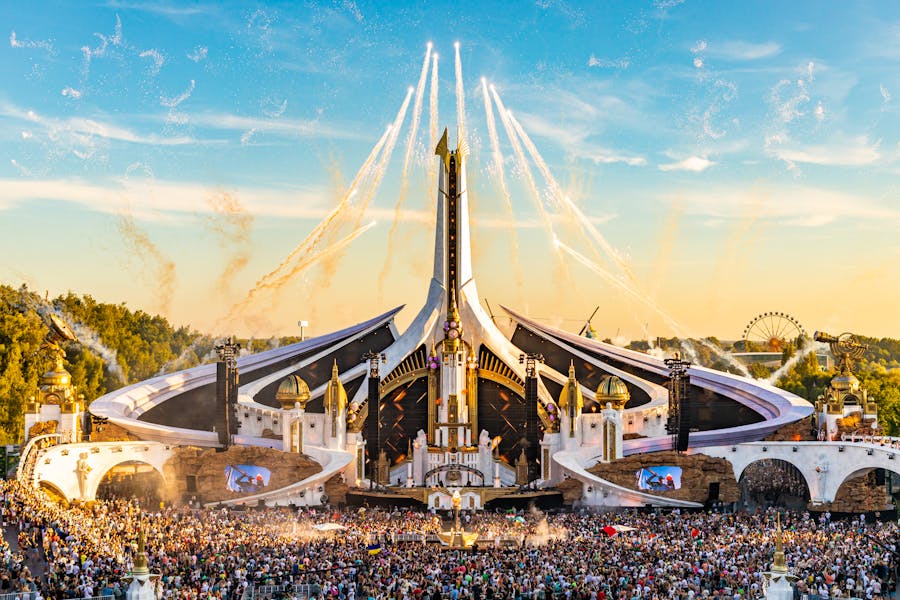
When Coone walked onto Tomorrowland’s Mainstage in 2018, he became the first Hardstyle DJ ever to play it. That mattered. Tomorrowland was already one of electronic music’s great shop windows to the world, and Hardstyle had spent years building an enormous international culture that could still somehow appear invisible from the centre of mainstream EDM.
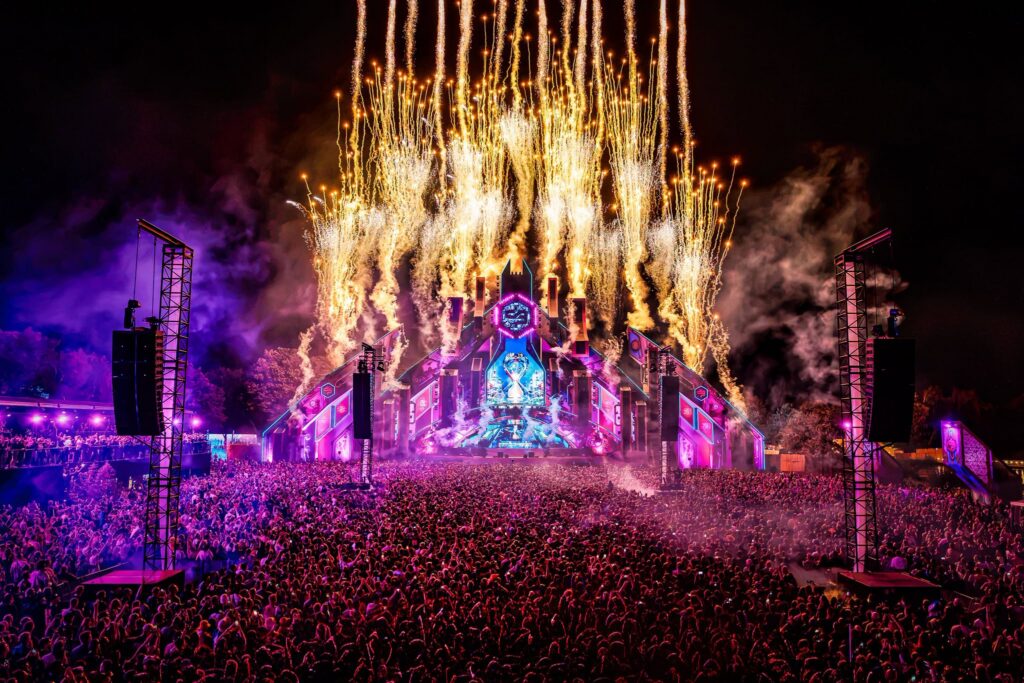
Eight years later, I am no longer sure “Hardstyle finally reaches the mainstream” is even an interesting headline. Because how many times can a genre finally arrive? Da Tweekaz played Tomorrowland’s Mainstage in 2023. MANDY debuted there in 2024. Sub Zero Project followed in 2025. In 2026, Tomorrowland went further and put Sub Zero Project into several different contexts, including a world-premiere b2b with Hardwell. Across the Atlantic, Ultra Music Festival gave Dirty Workz its first dedicated Hardstyle takeover in Miami in 2022. Then it invited Dirty Workz back… several times! By the 2026 edition, Ultra itself was describing it as Dirty Workz’s fifth consecutive year hosting a stage.
At some point, we should probably stop calling this a breakthrough. It is infrastructure. Hardstyle did not suddenly wake up one morning and become mainstream. “Overnight success” is usually just the result of many years of hard work. This is one of those cases, and the walls separating Hardstyle from the rest of electronic music have been quietly getting lower for years.
We have seen it in festival bookings. We have seen it in collaborations. Armin van Buuren collaborated with the likes of Wildstylez, D-Block and Isaac. Hardwell has made Hardstyle with Atmozfears and collaborated with Sub Zero Project. Timmy Trumpet and Vini Vici have released music with Sub Zero Project. These are no longer novelty encounters between two completely separate worlds. And we have seen it in records that escape our little ecosystem completely.
Back in 2012, Wildstylez and Niels Geusebroek managed something that still looks slightly ridiculous when viewed from inside the scene: “Year of Summer” reached number 3 in the Dutch Top 40. Ran-D’s “Zombie” followed another route, taking one of the most recognisable alternative-rock songs of the 1990’s and turning it into a Hardstyle anthem big enough to earn a Platinum certification in the Netherlands.
And now, in 2026, The Saints have released a Hardstyle remix of “Danza Kuduro”.
On paper, that last sentence should barely qualify as news. Hardstyle producers remix famous songs all the time. They always have. But the route this one took is more interesting. The Saints’ version had already been tested in front of audiences, requested at festivals and circulated in thousands of TikTok videos before Dirty Workz turned the momentum into an official release. In other words, nobody needed to persuade an audience to care about this particular Hardstyle track. The audience had already done the persuading. And I think that tells us something about what “mainstream Hardstyle” means now.
For years, the crossover fantasy seemed to involve sending one of our artists into their world. Get Headhunterz onto a giant EDM bill. Get Coone onto the Tomorrowland Mainstage. Get a Hardstyle record onto daytime radio. Get somebody from our scene into a collaboration with a superstar from outside it.
Those things still matter. But social media has introduced another route entirely. Now the mainstream song itself can be pulled into Hardstyle. Take something the listener already understands, keep the vocal or melody that provides instant recognition, give it the kicks and tempo, and let an Instagram reel or TikTok clip perform the introduction.
The listener does not need to know what Dirty Workz is, nor the difference between euphoric and raw. They don’t even need to have an opinion about reverse bass, gated kicks, zaagkicks, Defqon colours or whether Qlimax should still exist. They only need to recognize “Danza Kuduro”, and then Hardstyle gets two minutes to make its case. That sounds like the perfect gateway…
But is it?
That is the question I find much more interesting than another declaration that Hardstyle is “taking over.” Because hearing Hardstyle and becoming a Hardstyle fan are not the same thing.
“Year of Summer” could reach number 3 without turning every Dutch radio listener into somebody willing to spend twelve hours at Defqon.1. “Zombie” can be somebody’s favourite Ran-D record without that person ever investigating the rest of Roughstate. A gym playlist can contain fifty tracks described as Hardstyle without its listener ever knowing who Noisecontrollers is.
And that last phenomenon has become difficult to ignore. Search the streaming platforms for Hardstyle today and you can wander into an entire parallel genre made from gym playlists, Zyzz references, sped-up edits and Hardstyle versions of pop songs. Spotify and Apple Music are full of releases marketed exactly that way. To somebody who grew up with the Dutch scene, that version of the word “Hardstyle” can feel almost detached from the culture that created it.
But perhaps gatekeeping the genre completely misses the point…
There are listeners in Hardstyle communities who explicitly say they arrived through gym Hardstyle and then went looking for the real scene behind the sound. That is a gateway working exactly as a gateway should. The problem is that we do not know how often it happens, and maybe we have been measuring mainstream success by the wrong metric.
Perhaps it is not the size of the Spotify stream count, nor whether a Hardstyle DJ gets to play in front of 20000 casual listeners on the Tomorrowland Mainstage. Perhaps it is the percentage of those people who become curious enough to take the next step.
Does “Danza Kuduro” lead somebody to The Saints? Then onwards to Dirty Workz? From there to other artists? And eventually to actually exploring the genre?
Does somebody who entered because of a two-minute viral pop remix eventually find themselves arguing about a 2009 Scantraxx record?
Because maybe that is when crossover starts turning into culture. And perhaps those are the conversations we should be looking for when trying to measure conversion.
And there is another reason “Danza Kuduro” feels like such a perfect track to ask the question with. Hardstyle has been doing this forever. Long before TikTok, producers were already taking songs everybody knew, rebuilding them at 150+ BPM, cutting bootlegs, sampling heavily, handing out free downloads and turning fragments of mainstream culture into weapons for Hardstyle dancefloors.
The difference is that many of those records circulated in a scene small enough (and a distribution system informal enough) that there was far less expectation that every edit would have to be fully licensed before it could circulate widely. Today, a bootleg can go viral before its producer has even worked out whether it can legally be released.
And perhaps that makes tracks like “Danza Kuduro” useful for asking a question much bigger than whether one particular remix is good or bad: what exactly do we want this kind of crossover to achieve?
If wrapping Hardstyle around one of the most recognisable songs in the world puts the genre in front of millions of people, is that enough to call it a success? What if most of them enjoy it for two weeks and move on when the algorithm finds them something else? On the other hand, if only a tiny percentage stays, follows The Saints, discovers Dirty Workz, starts digging backwards through the genre and eventually finds themselves having conversations about 2009 releases… how small can that percentage be before the gateway stops being worthwhile?
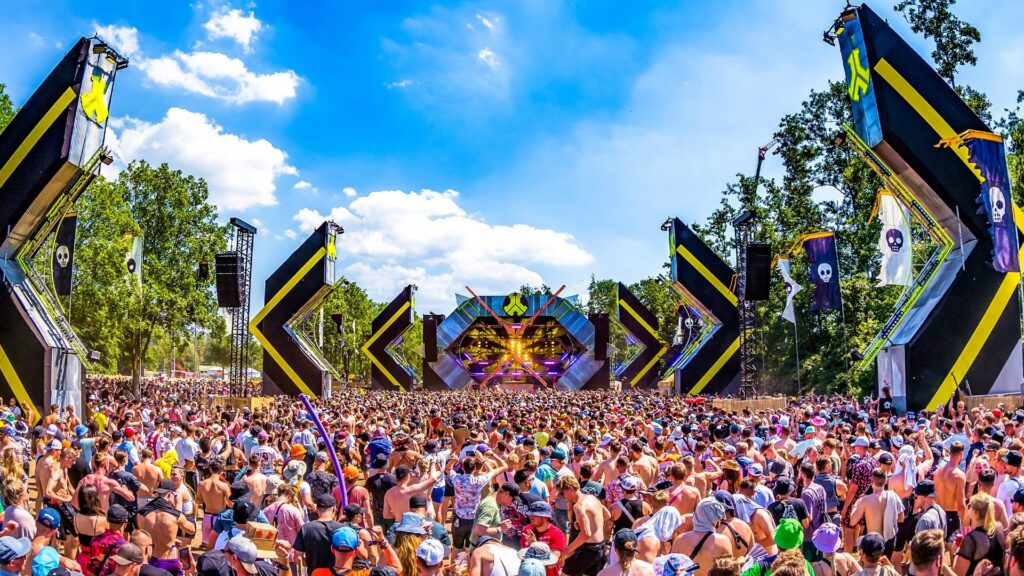
The same question applies to the Mainstage. Putting a Hardstyle artist in front of tens of thousands of Tomorrowland visitors is obviously visibility. But how much does the Mainstage itself really matter? Is being there the achievement, or is the achievement convincing some of those people to continue looking after the set ends?
Perhaps the viral pop remix and the Tomorrowland Mainstage are simply two different doors into the same room. One uses familiarity; the other uses exposure. Neither tells us how many people will stay.
And that may be the more interesting question now. Hardstyle no longer needs to prove that it can reach the mainstream. What we still do not really know is whether reaching the mainstream and bringing people into Hardstyle are the same thing.